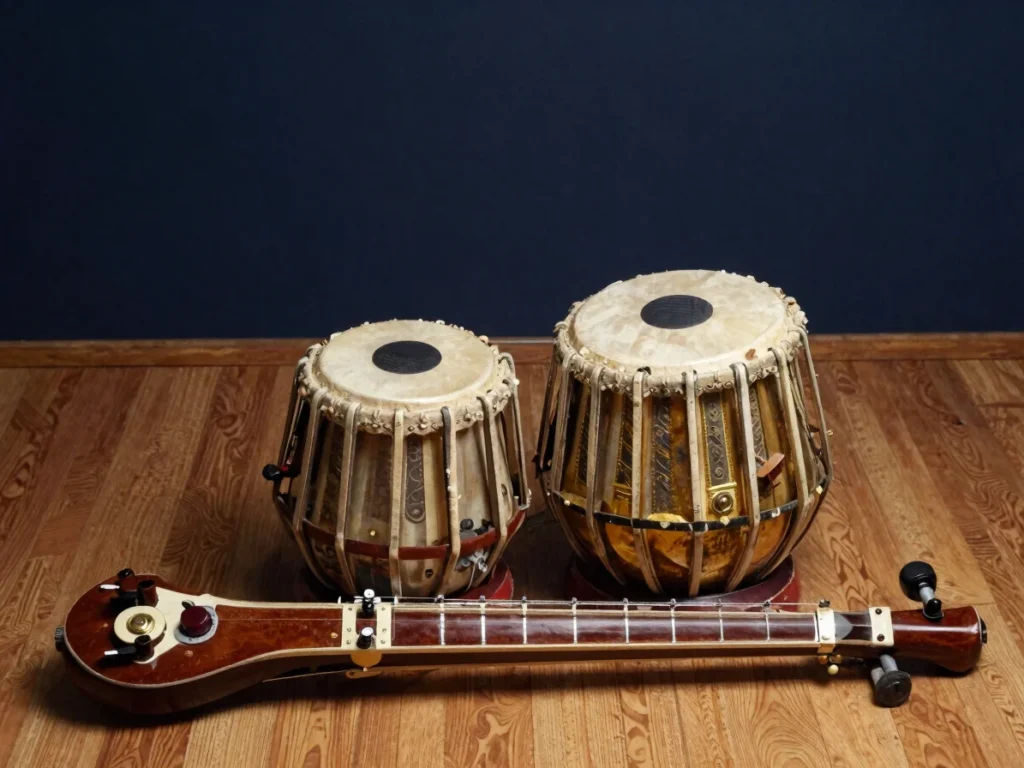
Indian instruments are traditionally classified by how they produce sound: Tat for stringed instruments, Avanaddha for percussion, Sushira for wind, and Ghana for solid, struck instruments. Each family shapes its own technique, repertoire, and craft.
From the rhythmic structure of the tabla to the sustaining drone of the tanpura, each instrument carries its own construction, tuning logic, and musical role.
Avanaddha
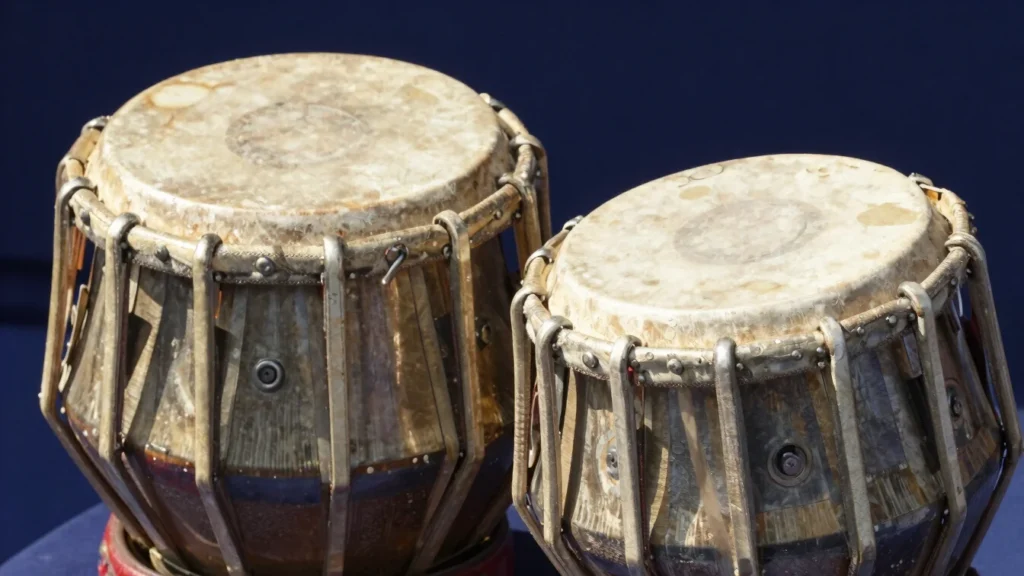
Tabla
A paired percussion instrument whose dayan and bayan produce a wide range of pitched and unpitched tones through skin tension and tuning paste.
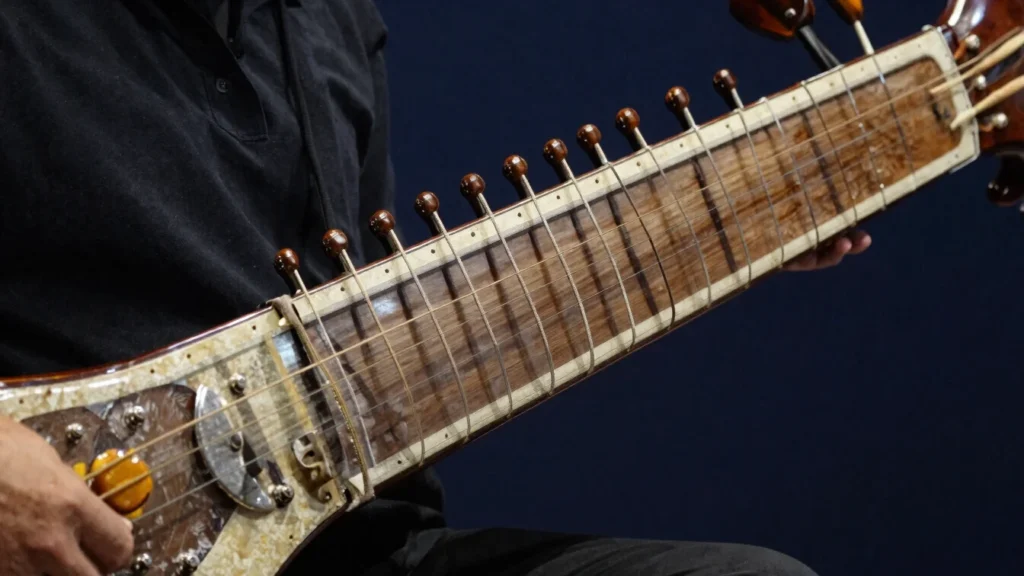
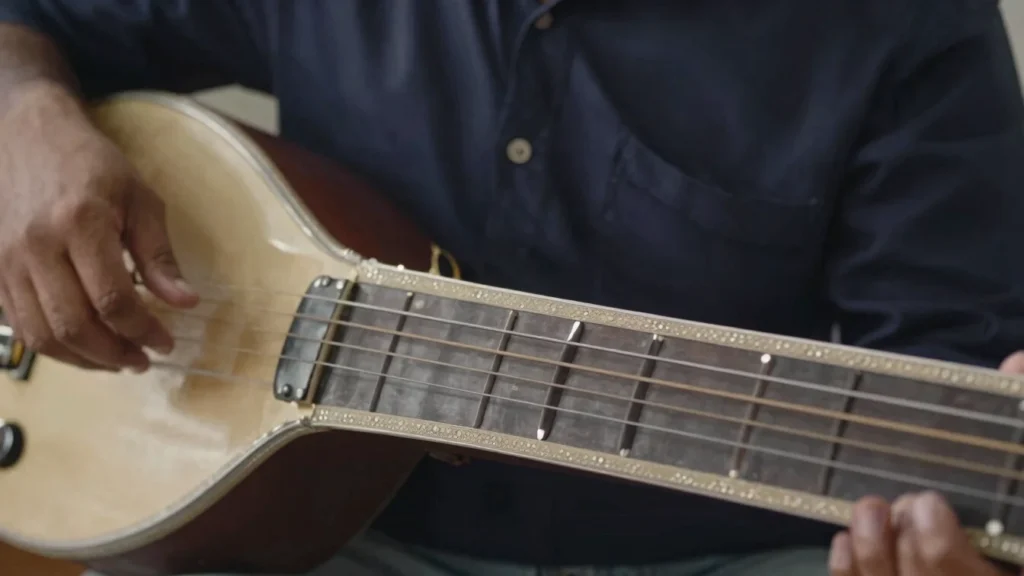
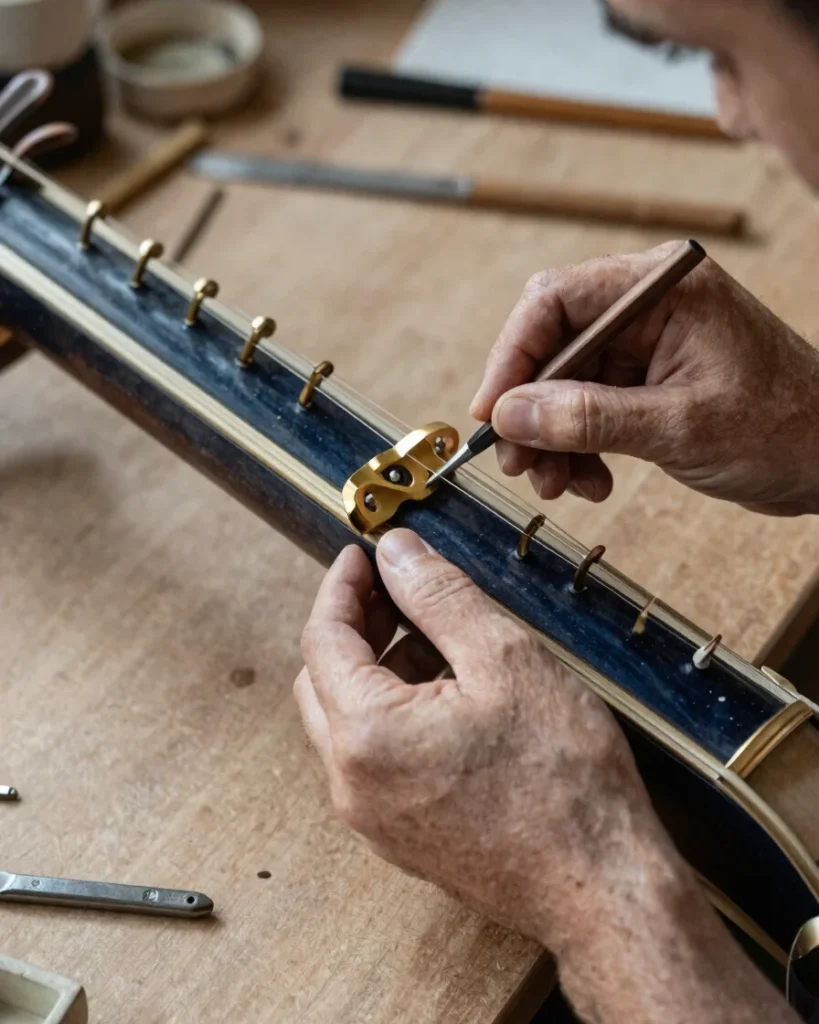
Seasoned tun or teak wood, carefully cured skin, and precisely calibrated bridges determine how an instrument resonates. Jawari filing shapes the buzzing overtones of the sitar and tanpura, and changes with humidity and season.
Looking after an instrument means checking its tuning, cleaning its surfaces, and protecting its skin and wood from heat and dryness so it keeps its voice across years of practice.
Pair daily practice with well-chosen acoustic accessories, from tuning tools to replacement strings, to build a steady foundation on any of these instruments.