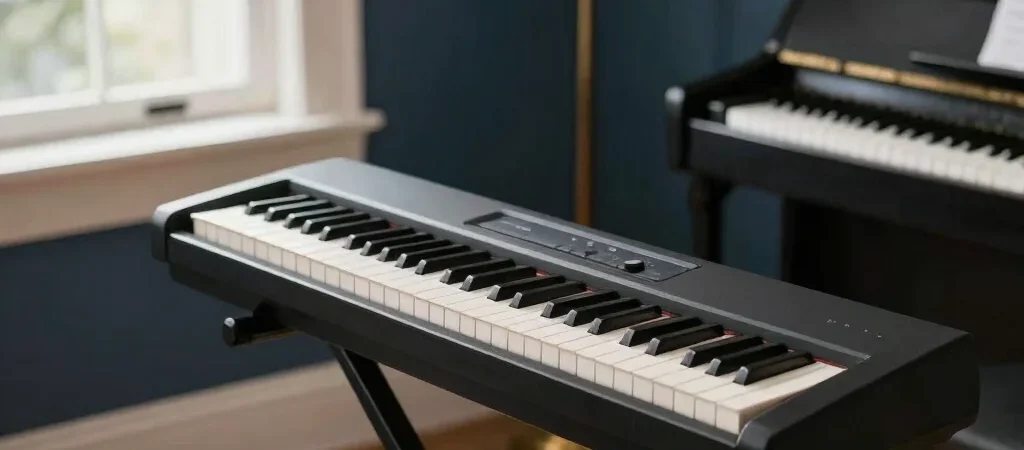
A full-size piano may be the image that comes to mind when you decide to learn, but it is not the only sensible starting point. In an apartment or shared home, a keyboard that fits on a stable stand and can be used with headphones may make daily practice more realistic.
Start with the playing feel
Acoustic pianos have a key action that responds to touch, while keyboards vary widely in their key count, action and sound options. If your lessons use piano technique, check whether the instrument offers full-size keys and a touch response that suits the teacher’s approach. Ask to try it if possible; specifications cannot fully describe how the keys feel under your hands.
Make room for real practice
Measure the space where the instrument will live, including room for a bench or stand and comfortable movement at the keys. In a household where sound carries, headphone compatibility can help you practise without filling every room, though it does not replace listening to your tone through speakers sometimes. Consider who will set up the stand and whether the instrument needs to be moved between lessons and home.
Choose around your learning plan
Ask your teacher what features are important before you buy, particularly if you expect to work on graded repertoire or piano technique. A keyboard may offer useful sounds and portability, while an acoustic piano provides a different playing experience and needs suitable space and upkeep. If MUSICAN.IN links to products, those affiliate links may earn us a commission; compare the specifications and return terms for yourself, and treat any recommendation as a starting point rather than a substitute for trying the instrument.